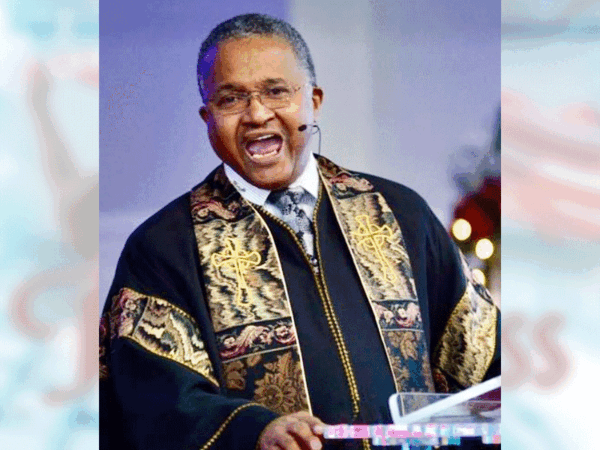
Many pastors erroneously believe that because churches are tax-exempt, pastors are too.
They are wrong, pastors must pay taxes too. Some innocently believe that they are 1099 employees and should not receive a W-2 like other church staff; they are wrong about that, too.
While ordained ministers receive special tax provisions—such as the housing allowance exclusion—they are legally obligated to pay income and self-employment taxes (SECA) on their earnings. Ignoring these responsibilities does not demonstrate faith; it exposes them to criminal prosecution.
The IRS maintains a broad definition of ministerial income. Compensation extends far beyond a weekly paycheck or base W-2 salary. If the church provides you with an office or parking space, or specifies the time of your service (e.g., Sunday or Wednesday worship), you are a W-2 employee.
Taxable income includes:
- Pastor Appreciation Gifts: Cash, gift cards, or tangible gifts collected by the congregation or board for appreciation days, anniversaries, or holidays are legally taxable income—not tax-free personal gifts.
- Honorariums: Fees received for officiating at weddings, funerals, baptisms, or guest preaching at neighboring churches must be reported.
- Unused Housing Allowance: Any designated housing allowance not spent on actual, eligible housing expenses during the calendar year must be reported as taxable income.
Failing to report appreciation funds or outside honorariums constitutes tax fraud. The IRS treats intentional underreporting of income as a federal offense, carrying severe penalties, mandatory back taxes with interest, and potential imprisonment.
Ministry depends on public and spiritual trust. Claiming ignorance of tax laws will not shield a pastor from an IRS audit or legal consequences.
In short, we are taught to render unto Caesar what is his and give God what is his.
Taxes belong to Caesar. We have to pay Caesar or he will jail us all until he gets paid.