Council characterizes new fire chief as DEI appointment whose best qualification is that he is white.
Governor Jeff Landry’s appointment of Bastrop Fire Chief Timothy Williams as Monroe’s new fire chief has ignited an explosive racial and political controversy, deepening the divide between Mayor Friday Ellis and the city’s Black-majority council. The appointment, made under the newly enacted Act 452, bypasses the Monroe City Council and has prompted a vow of legal action by city leaders who call the move unconstitutional and racially biased.

Ellis Bypasses Black Candidates, Governor Steps In
Williams, a white fire chief with only a high school diploma and no experience in large urban fire departments, was not Mayor Ellis’s first choice. Yet Ellis recommended him to Governor Landry after months of stalemate with the council. According to Black council members, he was a DEI appointment; he is white. McFarland said the mayor admitted in private meetings that the two Black candidates in his top five, Antonio M. Smith and Shabrodrick Williams, were “not fit to be fire chief.”
Both Smith and Shabrodrick Williams have extensive experience within Monroe’s fire service ranks and, according to civil service records, held more specialized training than Ellis’s original nominees. The council had previously rejected two of the mayor’s white nominees, Captain Daniel Overturf and Chief Timothy Williams (in a prior bid), citing a lack of qualifications and concerns about equitable leadership.
McFarland: “The Mayor is a Liar and a Fraud”
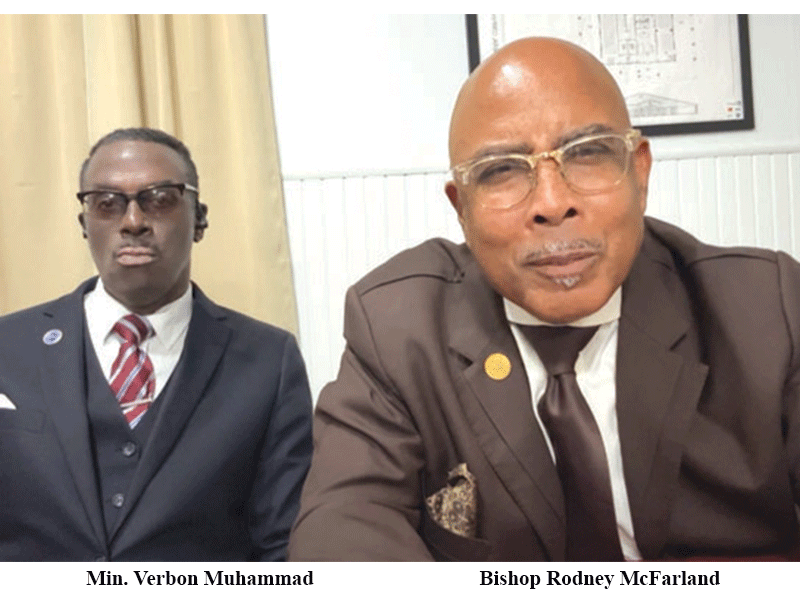
City Council Chairman Bishop Rodney McFarland didn’t mince words in a blistering social media broadcast Monday night, accusing Mayor Ellis of deceit and racial double standards.
“The mayor is a stone-cold liar,” McFarland said. “He told Councilwoman Juanita Woods and me that we were going to reopen the application process. Then he walked out of that meeting and went straight to the governor to make a recommendation.”
McFarland revealed that Ellis described the two Black candidates in his top five, Smith and Shabrodrick Williams, as “not fit to be fire chief.” The revelation, he said, confirmed what many in the Black community have long suspected: “This mayor is anti-Black.”
“Cooper Road Ass Whipping” Threat Sparks Outrage
McFarland also detailed a volatile confrontation between himself and longtime Ellis advisor former fire chief Jimmy Bryant, which he says took place in the mayor’s office in front of Councilwoman Woods and Mayor Ellis.
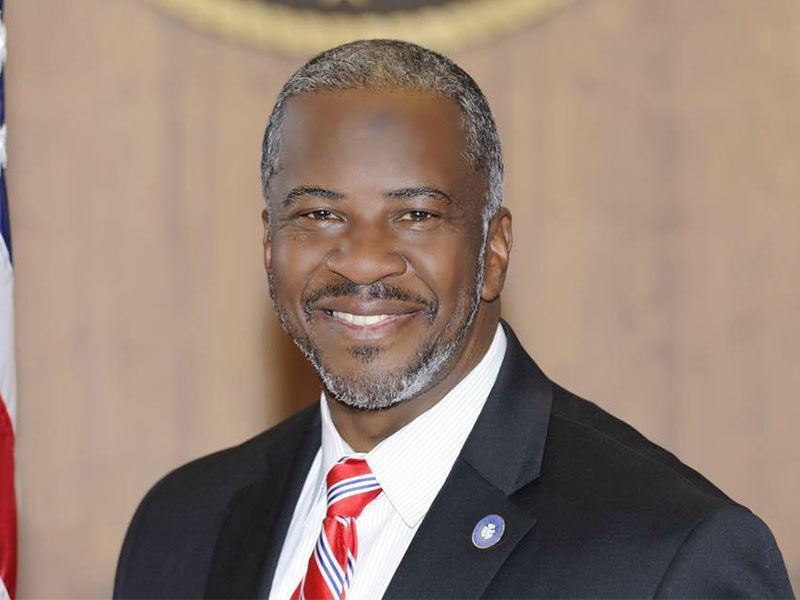
“Jimmy Bryant got in my face and said I was a fool—three times. Then he threatened to give me a ‘Cooper Road ass whipping,’” McFarland recounted. “That’s a direct threat from a city official, in the mayor’s presence.”
“Cooper Road” is a rough, historically Black neighborhood in Shreveport, where Bryant once lived. McFarland emphasized the racially charged nature of the threat and said the only reason he hasn’t pressed charges is out of respect for Woods’ plea to de-escalate.
“If he had hit me, all of Monroe would have come unglued,” McFarland said. “The mayor didn’t say a word to stop it. That’s how deep this goes.”
Legal Action Imminent
Councilman Verbon Muhammad confirmed that renowned civil rights attorney Carol Powell Lexing will represent the council in a constitutional challenge to Act 452. The law allows the governor to appoint police or fire chiefs in Monroe and Alexandria if vacancies are not filled after 12 months—effectively removing council oversight.
“This is not about who got the job,” Muhammad said. “It’s about how the democratic process was undermined.”
Muhammad, like McFarland, criticized the mayor for cutting the council out of the decision, stating that Ellis had previously assured him he would consult the civil service board before moving forward.
“The mayor lied. He promised to reopen the process. Instead, he waited until the 30th day, then used the governor to do what the people elected us to do,” Muhammad said.
Looking Ahead: Calls for Structural Change
With trust between the mayor’s office and the council seemingly shattered, both Muhammad and McFarland have floated the idea of revising the city charter to allow voters, not politicians, to elect the fire and police chiefs.
“Maybe it’s time Monroe citizens choose their fire chief at the ballot box,” Muhammad said.
The Broader Picture
Since 1996, Monroe has traditionally had Black fire chiefs, aligning with the city’s majority-Black population. Mayor Ellis, who was elected in part with support from Black voters, is now facing accusations of eroding that tradition through backdoor politics and state-level power plays.
Council members argue that Act 452, authored by Senator Stewart Cathey and rushed through the legislature in the final minutes of the session, was a political tool requested by Ellis to override local governance. The law applies only to Monroe and Alexandria, further fueling claims of racial and regional targeting.
“This is Trump-style governance,” McFarland said. “The mayor didn’t get his way, so he went around us and got the governor to do his dirty work. But we will fight him all the way to the Supreme Court if we have to.”
As the legal battle begins and tensions mount, Monroe’s fire department now finds itself under the leadership of a chief many in the city never chose, and a community determined not to be silenced.