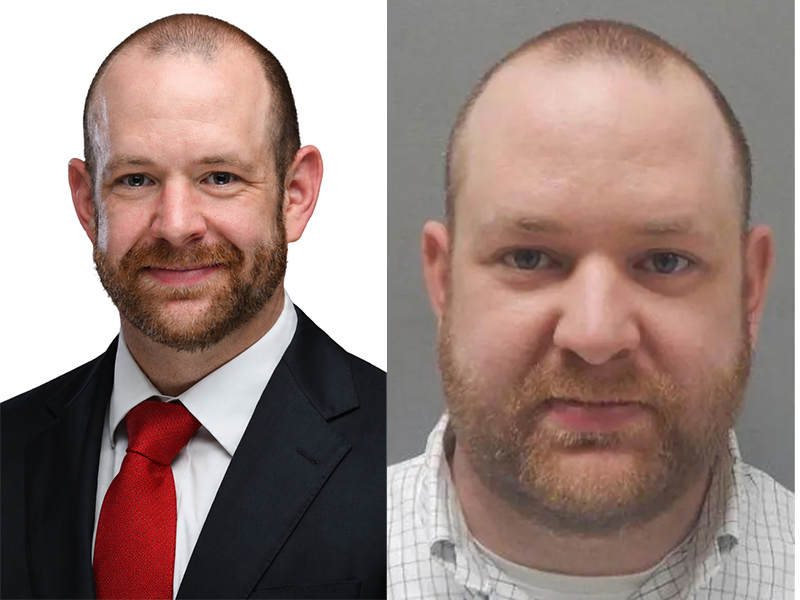
Monroe City Attorney Brandon Creekbaum was arrested twice for DWI. Once in 2011 and a second time in 2021 after crashing his car. The Supreme Court suspended his law license and then lifted the suspension. Creekbaum, now fully recovered and rehabilitated, wants to be a judge. He will make decisions about other drunk drivers. Will he be a gift to defense attorneys who expect the same mercy he received, or will he have an ongoing ethical conflict?
When voters in Ouachita and Morehouse Parishes head to the polls on November 3, they will weigh a judicial candidate whose legal acumen is widely acknowledged across Northeast Louisiana, but whose personal history introduces a compelling dimension to the bench.
Brandon Creekbaum, a practicing attorney with over 15 years of litigation experience in state and federal courts, is seeking election as a District Judge in the 4th Judicial District Court. Recognized by colleagues as a precise, detail-oriented counselor with a deep command of statutory law, Creekbaum’s professional reputation has long rested on his methodical approach to the bench and bar.
Yet off the court docket, Creekbaum’s journey to the November ballot carries a deeply personal narrative—one marked by recovery, quiet accountability, and a newly established family life.
A Career Defined by the Book
Throughout his career, including service as an assistant city attorney and trial advocate, Creekbaum has built a reputation as a stickler for procedural strictness. Practitioners in the 4th Judicial District describe him as a lawyer who insists on exact compliance with courtroom rules, statutory interpretation, and legal precedent.
“Brandon has always been someone who views the law not as a flexible guidelines sheet, but as a binding structure,” said one local attorney familiar with his practice. “He reads the statute, he follows the text, and he expects everyone else in the courtroom to do the same.”
That strict constructionist view of the law is central to his campaign platform, where he has emphasized impartiality, equal application of the law, and administrative efficiency.
Personal Transformation and Recovery
Behind his professional standing, however, lies a personal chapter that Creekbaum has had to navigate openly.
Since 2011, Creekbaum has battled a severe drinking problem that eventually intersected with his legal career. Following alcohol-related incidents, his law license was formally suspended by the Louisiana Supreme Court in October 2021 for a year and a day. However, reflecting his commitment to rehabilitation, the Supreme Court deferred the suspension in its entirety, placing him on probation conditioned upon his strict adherence to a recovery agreement with the Judges and Lawyers Assistance Program (JLAP).
Those close to him note that Creekbaum fully embraced the recovery process, completing his monitoring requirements and maintaining continuous sobriety. Today, those who work alongside him describe a man whose life has stabilized dramatically. He is newly married to his wife, Amanda, and the couple is raising a young son, Austin—milestones Creekbaum frequently points to as the cornerstone of his personal anchor.
The Bench Dilemma: Strict Text vs. Human Experience
Should Creekbaum win the judgeship on November 3, his background presents both a unique perspective and potential operational challenges, particularly when presiding over criminal dockets that include Driving While Impaired (DWI) and substance-related offenses.
On one hand, supporters argue that Creekbaum’s personal journey through addiction and recovery equips him with an authentic understanding of the justice system’s rehabilitative side. His firsthand knowledge of court-mandated diversion programs and professional monitoring gives him practical insight into which accountability measures actually work.
On the other hand, presiding over alcohol-related offenses presents a delicate balance:
- The Expectation of Strictness: As a self-described stickler for the letter of the law, Creekbaum will be expected to apply mandatory statutory minimums and evidentiary rules without variance, regardless of a defendant’s personal circumstances.
- Scrutiny from Counsel: Defense attorneys and prosecutors alike will closely monitor his rulings in DWI cases. Any perceived leniency could be interpreted by critics as personal empathy overriding the law, while unusually harsh sentences might be viewed as overcompensation to prove judicial toughness.
- Recusal Considerations: Litigants in substance-related cases may periodically test the boundary of judicial impartiality, raising questions about whether a judge’s personal recovery history impacts his view of similar offenses.
Looking to November 3
For the electorate of the 4th Judicial District, Creekbaum’s candidacy brings a fundamental question to the fore: Can a judge’s past struggles, paired with a strict commitment to the written law, yield a more effective perspective on the bench?
Creekbaum’s campaign continues to focus on his core message—that experience, rigorous preparation, and an unyielding respect for the rule of law are what qualify him to serve.
As election day approaches, voters in Ouachita and Morehouse Parishes will decide whether his combination of legal precision and personal recovery makes him the right fit for the 4th District bench.