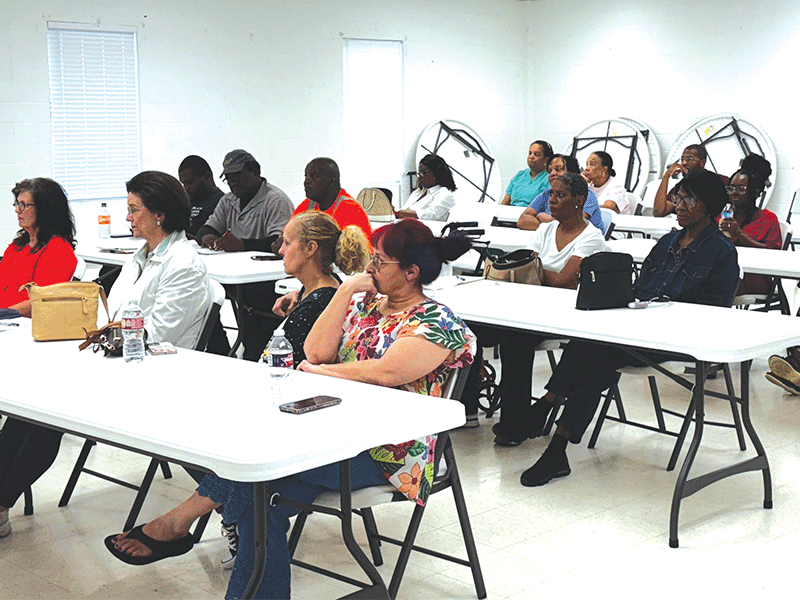
In a resounding show of community unity, residents of Monroe’s District 3 overwhelmingly rejected the proposed privatization of the city’s garbage and trash collection services during a public meeting held Tuesday night at the Powell Community Center.
The meeting, one of several being held across the city, was organized to gather public feedback before the Monroe City Council votes on a resolution to accept a bid from a private company seeking to take over sanitation services. That vote is expected to take place at next Tuesday’s council meeting.
If the council wanted clarity from the public, they got it. In a powerful moment near the end of the 90-minute session, local attorney Arthur Gilmore called for a show of hands from the standing-room-only crowd. Every hand went up in opposition to privatization.
The room, filled with attorneys, educators, public workers, professionals, and retirees, spoke with one voice: keep garbage collection under city control.
Councilwoman Juanita Woods, who represents District 3, asked if the attendees understood that whether or not the city privatized, an increase in garbage fees was still likely due to rising costs. Even after the clarification, residents stood firm.
Much of the information shared at the meeting had been discussed in previous forums: Monroe has not raised sanitation rates in over 21 years, the city is currently losing over $1 million annually on garbage operations, and contracting with a private company could potentially save $200,000—but not enough to close the deficit entirely.
The big sticking problem is that 21 of the 31 men the city uses to man its trucks will lose their jobs. Ten full-time workers will be absorbed elsewhere. The city hires the 21 temps daily to avoid paying them benefits, which was described at the meeting as “slave labor.”
City officials have argued that privatization could help solve persistent issues such as outdated trucks and inconsistent pickup schedules. But community members at the Powell Center focused on deeper concerns.
Speakers including Robert “Truck” Johnson, president of the city workers’ union, Roosevelt Wright, Jr., publisher of the Free Press, and attorney Arthur Gilmore raised pointed questions about equity and fairness. They noted that 21 temporary workers—many of whom are African-American—would likely lose their jobs under the proposal. They also questioned why the city was willing to absorb annual losses at the civic center and zoo without demanding profitability, but expected the garbage and trash department—where all employees are Black—to break even.
Wright warned that approving the contract could amount to targeting one of the city’s few all-Black departments for dismantling under the guise of cost-cutting.
Residents expressed concern about the long-term consequences of turning over essential services to private companies. “This is not just about trash—it’s about people, jobs, and dignity,” one speaker said.
As the meeting concluded, the message from District 3 was clear: Monroe residents want their garbage service improved, but not at the cost of community jobs or control.
The City Council will consider the community’s feedback when it meets next Tuesday to vote on the proposed resolution.