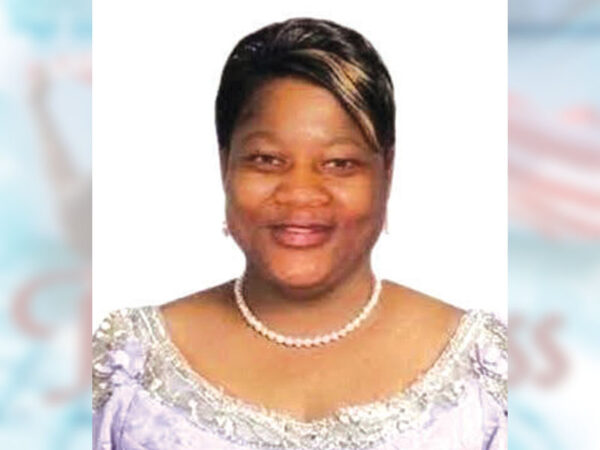
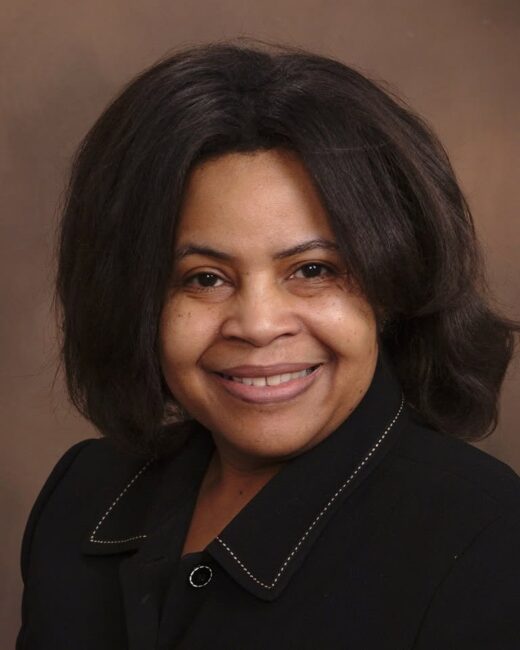
As a teenager, Mary Alice Bryant filed petitions against KNOE-TV, started the Black History, and began the Renaissance Movement. She has been a law clerk for Judge Benjamin Jones and Carl Sharp, and has served as administrative Judge over unemployment appeals. Now she wants to be a District Judge. This is a profile of her life.
Next will be Jasmyne McConnell.
Who is Mary Alice Bryant Cezar? Her pictures are on billboards and on yard signs, but who is the woman behind the posters?
To understand Mary Alice Bryant Cezar, it helps to begin long before the courtroom. Begin in a Monroe home filled with books.
Her parents, John D. Bryant and China Esther Bryant, believed deeply in education. Her mother graduated from Monroe Colored High School, now Carroll High School, attended Southern University, and later completed her degree at Northeast Louisiana University, now the University of Louisiana Monroe, while raising a family.
Her father, a disabled Korean War veteran, had a sharp mind and a love for reading. He passed that love on to his children.
“My dad loved books. My mom loved books. We had a wall of books and encyclopedias at home. I can remember sitting by the fireplace reading those Compton encyclopedias. We were real bookworms.”
Those books helped open a world of possibilities for a young girl who would eventually become an attorney, judicial law clerk, administrative law judge, community activist, and candidate for the district court bench.
Family came first
Mary Alice grew up with four siblings—a sister and three brothers. Family was more than a word in the Bryant household. It meant responsibility. That lesson remained with her throughout adulthood.
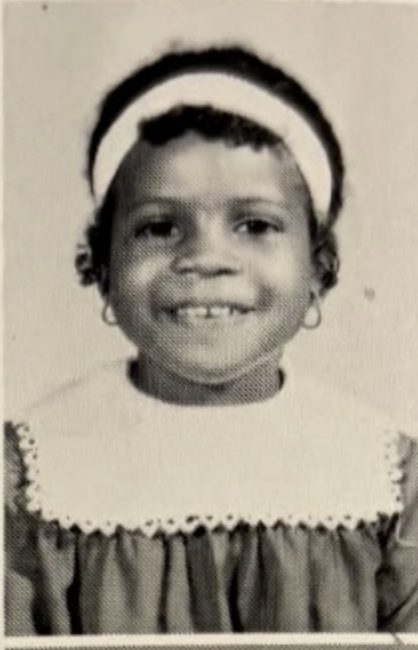
Mary Alice grew up dreaming about making a change. As a teenager, she pushed for change and started a movement and the Black History Parade.
Even while maintaining a demanding legal practice, she opened her home to care for her aging mother and her disabled, nonverbal brother.
Her willingness to become a caregiver reflected something that would also shape her professional life: she learned that people are more than their problems, illnesses, legal cases, or circumstances. They are human beings who deserve to be heard and treated with dignity.
A young woman with big ideas
Her education began at Little Flower Academy Head Start and continued through Swayze Elementary and Booker T. Washington Elementary during the years of school integration. She later attended Ouachita High School.
She moved quickly academically, completing her high school credits in 1979, a year ahead of schedule. She immediately began college courses at Northeast Louisiana University before formally receiving her diploma with the Ouachita High School Class of 1980.
Even as a child, Mary Alice had a habit of seeing something in her mind before figuring out exactly how to make it happen.
Once, she began telling classmates that she was going to have a birthday skating party. There was only one problem.
She had not told her parents.
When her brother informed them, her parents went to work and made the party happen.
“I wasn’t lying or anything. I thought I was having a party. I just hadn’t told my mom about it yet!”
The story is humorous, but it reveals something about her personality that followed her into adulthood: she could see possibilities before all the pieces were in place.
Finding her voice
That confidence soon found a more serious purpose.
As a young student, Mary Alice watched local television coverage of controversy involving the Monroe City School Board. She believed the coverage failed to adequately present different sides of the issue. Instead of simply complaining about it, she researched the rules governing broadcasters.
Then she acted.
Working with local minister the late Rev. John L. Russell, Sr., she prepared a petition, gathered signatures, and sent her concerns to the television station by certified mail.
The effort brought change. The station began more clearly identifying opinion pieces as editorials and providing greater opportunity for opposing viewpoints.
It was an early lesson in the power of informed community action.
Helping spark a Renaissance
Mary Alice also had an early love for African American history and culture.
She performed dramatic interpretations of works by James Weldon Johnson, including material from God’s Trombones, and presentations about Harriet Tubman.
That interest eventually joined with her instinct for community organizing.
Working with the late Coach James Huey at a local recreation center, she helped organize a Black History program. The experience caused her to think bigger. She wanted something that would reach beyond one building or one program.
“I looked up the word Renaissance. It’s an awakening. I wanted something that represented a movement and pride that belonged to the community—something massive.”
While sitting outside on the NLU campus, an idea came to her: organize a community-wide parade.
She began talking to community leaders, including local civic leader Emily P. Robinson.
Robinson asked a practical question: Did she have a parade permit? She did not.
Robinson helped her secure one, along with other necessary legal steps. She provided young Mary Alice with the guidance to make the dream of a “Black History Parade” even though the label “Black” was considered radical in the 1970s.
The idea grew into the Renaissance Movement, which brought cultural celebrations, African American mayors from around Louisiana, national personalities, and community activities to Monroe.
Once again, Mary Alice had imagined the destination before she knew every step required to get there.
Turning service into a profession
Eventually, she faced an important question: How could she build a career around something she already knew she loved—helping people?
The answer was law.
“I was working in the community, volunteering for this and that. I love to help, and I feel most of service when I’m helping others. I had to think of what kind of job would allow me to earn an income while being of service to people.”
Her natural abilities also pointed her toward the profession.
She loved to read. She enjoyed research. She could analyze complicated information.
Bryant Cezar enrolled at the Southern University Law Center, where she earned her Juris Doctor degree.
It began a legal career spanning more than three decades.
Seeing the courtroom from different sides
One unusual feature of Bryant Cezar’s legal career is the number of perspectives from which she has seen the justice system.
As a judicial law clerk, she served under Judge Benjamin Jones and Judge Carl Sharp. Her work included reviewing cases, examining evidence, researching legal questions, and helping prepare judicial opinions in civil and criminal matters.
She later served as an administrative law judge, presiding over unemployment appeal hearings. In that role, she listened to testimony, examined facts, applied the law, and issued legal decisions.
As a practicing attorney, she spent decades representing people who came to her with real problems and expected straight answers.
Sometimes helping a client meant fighting for that person.
Sometimes it meant explaining that the facts or the law did not support what the client wanted.
Those experiences allowed her to see the legal system from the lawyer’s table, the judge’s perspective, and through the eyes of people whose lives can be changed by a court decision.
The one case she remembers most
One case involving an elderly woman has remained with Mary Alice over the years.
Once, she was appointed legal curator in an interdiction proceeding involving a woman living in an assisted-care facility.
She met her client and discovered that the woman could communicate clearly and express her wishes, but there were those who wanted her declared incompetent
The woman was placed in an institution, and Mary Alice fought against the clock to plead her case so she could return to her home before she died.
Despite her best efforts, the woman died before she could get her back home.
That woman’s case has remained in her memory and motivated her to help others while there is still time.
It was a reminder that behind every case number is a person. Behind every petition is a story. Behind every legal argument may be a family trying to determine what happens to someone they love.
Life away from the courtroom
Away from legal work, Bryant Cezar remains the book lover her parents raised.
She enjoys reading and research, especially historical fiction and stories connected to real human experiences.
She also enjoys people. She likes conversation and observing how people communicate and interact with one another.
Then there is cooking.
Chicken—fried or baked—is a dependable favorite, while a good steak is also welcome. She admits, however, that cooking requires her full attention.
“If I’m relaxing or enjoying what I’m doing, it’s going to be real good. But I have to focus, or my mind will be on something else and I’ll burn it up!”
She also maintains a special attachment to the name Bryant. Although her married name is Bryant-Cezar, she has continued to publicly embrace her maiden name as a tribute to the father whose influence remains an important part of her life. She and her husband are happily married, and he has no problem with “Bryant” being on the billboards rather than Cezar.
Content with the simple things
Ask Bryant Cezar about her life’s grand bucket list and the answer reflects the same mixture of thoughtfulness and humor that runs throughout her story.
She might like to see the Grand Canyon one day. “People have told me that the photographs simply cannot capture the experience of standing before it.” She wants to go there one day.
Yet she does not describe herself as someone chasing a long list of destinations.
She can find enjoyment in simple things—watching large ships, observing people, spending time with family, reading, thinking, and deciding for herself how to spend a quiet day.
That may be fitting.
Mary Alice Bryant Cezar’s story has never been mainly about collecting titles.
It is the story of a little girl sitting beside a fireplace reading encyclopedias.
A young woman willing to fight a television station when she believed something was unfair.
A community organizer who dreamed of a parade before she knew she needed a permit.
A daughter and sister who became a caregiver.
A lawyer who discovered that service could become a life’s work.
And through all those chapters runs the lesson she learned in a home filled with books: keep learning, keep thinking, keep serving, and never be afraid to imagine what might be possible.