
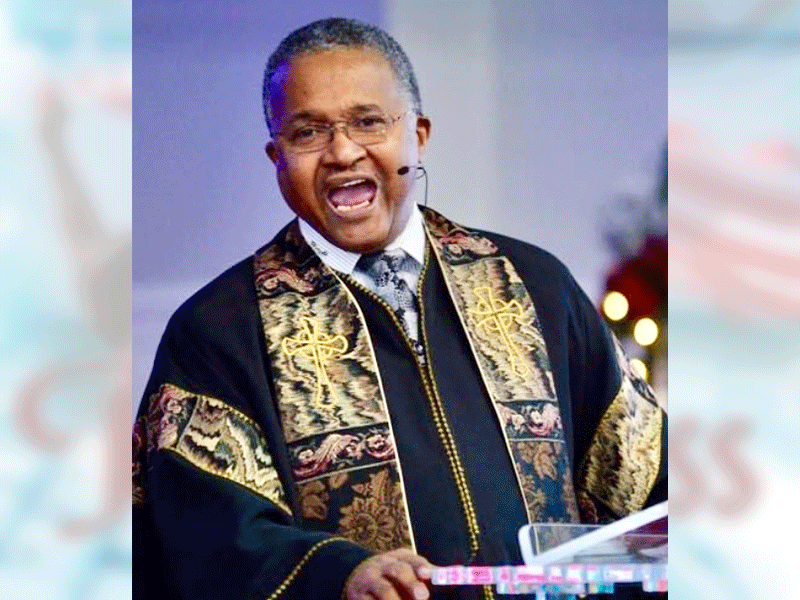
By Roosevelt Wright, Jr.
For generations, the traditional small church structure has revolved around familiar, established departments: Sunday School, Women’s Fellowship, the Choir, Ushers, and the Mission.
While these core pillars have served congregations well, relying strictly on rigid departmental silos can inadvertently constrain a church’s total reach and effectiveness.
The intentional shift from departments to ministries opens the door to broader, more flexible opportunities. Departments tend to focus on internal structure and maintenance—managing meetings, schedules, and fixed routines. Ministries, by contrast, center on active purpose, outreach, and kingdom service. They allow a small church to embrace vital community needs that don’t fit neatly into a traditional departmental box, such as digital media outreach, community food security, youth mentoring, or grief support.
Moving toward a ministry-based model creates needed space for spiritual gifts that might otherwise sit idle. A member who feels no calling to sit on an usher board or teach a traditional Sunday School class may have a passionate heart for prison visitation, financial literacy workshops, or community gardening.
Pastors must lead their congregations in broadening their overall operational approach. Transitioning from departments to ministries does not require dismantling your church’s rich heritage or abandoning foundational teams; rather, it means expanding your collective vision.
By reframing rigid institutional structures into fluid ministry initiatives, pastors empower members to serve according to their true God-given gifts rather than administrative titles.
As leadership expands these horizons, the small church transforms its focus from merely maintaining programs to actively multiplying ministry.